Tuesday, 26 July 2016

The Lang Pioneer Village Experience

By Marcus


Visiting this historical village that replicated life in Peterborough County in the 19th century was an experience I surely cannot forget. Being transported back in time, it was particularly fascinating to see the buildings where families like the Ayottes, Fifes, and Fitzpatricks once roamed and lived their every day lives.  During my 3-day experience at Lang Pioneer Village, I was captivated by the number of buildings, artifacts, including tools, and costumes people used during pioneer times. Back in the 1800s it was such a difficult life.

The pioneers lived in cabins that seemed so simple, small and cramped. But, having a shelter, a wood stove for heating and cooking, an area to sleep and eat, was all a family needed. However, according to today’s standards families' homes require so many modern amenities like two car garages, multiple televisions, many rooms and multiple appliances. This journey was so important for me because it allowed me to disconnect from the modern world of phones, electronics and big cities so that I can see how people lived before my time; small communities, small buildings and houses, no electricity and actually connecting with their surroundings for entertainment. 

Keene Hotel, Lang Pioneer Village, Circa 1870's

Something else that I found particularly fascinating was the price of the hotel rooms at the Keene Hotel. The room that they referred to as the “best room” costs a grand total of 75 cents.  I couldn’t believe that 75 cents back then could get you shelter, a hot dinner, fully operational bathroom and a bed to sleep on where as 75 cents cannot even buy you, say, a chocolate bar now-a-days. But I found that the upstairs has a creepy sort of vibe because it was just so dark and knowing it was an old building that inhabited people from a long time ago. To me the building has strong presences of spirits that might have been there before.

Glen Alda Methodist Church, Lang Pioneer Village, Circa 1898


Although it was interesting to see the Hotel, my favorite of all the buildings at Lang Pioneer Village was the Glen Alda Methodist Church. It was my favorite because it seemed so small yet enough space to practice Christianity. Myself being a Christian, it was amazing to see how the people before me practiced religion. The windows were so beautifully tinted and it just filled my mind with knowledge and interest to see an original Hymn number board and an organ from the 1890’s. Sadly, my time at Lang Pioneer Village had to draw to a close but I will always remember what I learned about the importance of preserving our heritage, learning how people lived in the past and the importance of giving back to the community, in which I gave back by helping out at Lang Pioneer Village.


Marcus is a grade 10 student at Trinity College School and guest writer for the Museum.

Education Back in the Day

By Erik

As we all know, our ways to live and services around the world have changed through the years, and of course, school is no exception.

I had the chance to travel back in time to the 19th century by visiting Lang Pioneer Village’s school. I became a witness of how classrooms used to be, sorry, how the classroom used to be. That’s right, the school used to be just one classroom with all the students from different grades being taught at the same place.

Another big difference between the past and present of the schools is the way to teach. The 19th century happened years before the birth of the Digital Revolution so people weren’t able to learn or teach through the benefits of technology. Instead, they were taught by chalk boards and used mini chalk boards as notebooks as well. Sure, chalk boards are still being used today to teach, but most of our education and assignments are applied in computers.


Discipline applied in school is another aspect of school that has also changed. They used to have a board telling the rules about the way the students should behave during class and if they refused to obey they would have consequences. Rules in the classroom were simple but solid, for example, not leaving your desk without permission, being silent during class, not disturbing peers, among many other rules. The rough part was the punishment of not following these rules. Through the years the rules became the basic structure of discipline in school but punishments were becoming smoother until the point that punishments were no longer intimidating for kids, much like it is today.


Erik is a grade 11 student at Trinity College School and guest writer for the Museum.

Tuesday, 12 July 2016

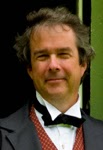
Marcus Vinson

By Suzanne

The following is a fictional story about what it might have been like for a male student who wanted to become a teacher in the late 1800s.

I want to be a teacher. I remember sitting in class, just being so captivated about what the teacher had to say. We weren’t a rich family, but we managed. My sisters and I would walk to school, hand in hand, through my Pa’s fields and over the creek that ran between where we kept the livestock and where we grew the harvest every summer. Carol and Ethel were never as excited to go to school as I was, they were always stopping to chase butterflies or toads or mice. I had to be the mean older brother that dragged them away from their play. They didn’t know it yet, but school was the most important thing in their lives at the moment. It was our ticket to a better, cushier, comfier life. Once we were educated and got good jobs, we could finally get our Ma and Pa to stop working so hard. We could take care of them like they did for us. I wanted to go to a good school, a good high school or college. I didn’t want to wind up like one of those kids sitting in the back of the schoolhouse at 19 years, I wanted something better. When I turned 17 I took the entrance exams for Harvard, it was far away from home, but I wanted it. The exam was on literature, and Greek, and Latin. I remember staying after school almost every day, studying with my teacher. She told me to give up. She said that Harvard was only for rich students but I wouldn’t listen. My Pa got real mad. He wanted me to stay home and help him in the fields. I got a couple spankings, but I knew that he wanted me to succeed; it’d just be hard. He wanted me to make it; he just didn’t think I could. When the time finally came, I wrote the exam. I was shaking. It was scary, my Ma tried to talk me out of going that day. I went anyways. The results didn’t come in until about a week later. I was too scared to go to school until then, or even help Pa out in the field. I stayed in bed, helped Ma take care of Ethel and Carol. I vomited a few times thinking about failing. In the end, I passed. My Ma cried, I think my Pa did too- just where we couldn’t see him. I went on to study at Harvard. I learned an awful lot about Latin, and Greek. I didn’t have much time to visit my family, but we wrote to each other whenever we could. My Pa couldn’t read, so Ma had to read it to the family. Eventually I graduated and became a professor. I wanted to teach, I loved to learn, so I wanted to help others do the same. I went on to teach at several smaller schools, and eventually became a professor at Harvard. My parents were proud, and never failed to express it. I invited them to come live with me, I made a good amount of money at my job, and could afford to take care of them both. They agreed, and brought Carol and Ethel with them. Shortly after the move, Ethel became a seamstress and got married and moved out. Carol never married, but I knew that she was happy. She got a job at the General Store selling fabrics to all the ladies in town. It makes me sad to think of all the kids back home who never made it far in school. I guess they must have taken it for granted. I resolved to never let any kid of mine do that. As I grew older, my Pa and Ma never stopped thanking me. Ma kept the house clean and Pa took care of my gardens. I could never have asked for a better life. I knew to thank myself as it was my work that got me here, even when not another soul believed in me. I guess that’s why I’m writing all this down. I don’t want anyone out there to be wallowing in self-pity, thinking that they have bad luck. Your future is in your hands, you just have to work for it.


Suzanne is a student at Trinity College School and guest writer for the Museum.

Tuesday, 28 June 2016

Pondering Children and Medicine in Pioneer Times

By Kim Vojnov

As I entered the Lang Pioneer Village Museum collection of artefacts, I was instantly swept back in time, imagining my life as a pioneer. Carving out an existence in this country would be difficult enough in terms of dealing with climate, housing and agriculture; I struggled to imagine what the medical practices would have been like, especially in terms of trying to raise healthy children. As a mom myself, I can’t express the immense gratitude I feel when it comes to our modern medical system meeting the needs of my own kids. Imagining the already existing hardships, I tried to wrap my head around how it would feel to have a sick child in this time period.

We are all aware of how many diseases killed early settlers, yet I found myself wondering how often the herbal remedies, bloodletting practices and bottled remedies that contained alcohol, cocaine, or opium were used and successful on children. Questions flooded my mind: What if my child needed a valuable type of medicine? How realistic would it be that with the barter system, I would actually have the ‘equity’ available to attain that medicine? Would all doctors offer similar treatments and what options did I have if one didn’t work? What would the side effects be-or would they even matter? Perhaps you simply had blind faith and just did your best to treat your sick kids.


One thing that caught my eye as I strolled through the fascinating collection of artefacts was a little orange and black box in the medical section. In big white letters the words Diatussin Syrup jumped out at me. It turns out that a company, Bischoff, produced this, along with many other patented medicines in order to treat the most serious health maladies during the time period. Doctors prescribed a dosage of a few drops of Diatussin for pertussis, otherwise known as “whooping cough”. This illness was, and still is, one of the most contagious ones out there as it spreads through the air by incessant coughing. So many lives have been lost due to its brutal side effects and unfortunately, it almost always seems to affect young children.

While this bacterial infection still exists today, a major difference is that babies are now immunized against it and as a result, many lives are saved. As I examined the Diatussin bottle on the shelf at Lang, I hoped that whoever used it to treat their child all those years ago had been successful. I decided that I was going to let myself imagine that they had been. I left Lang Pioneer Village with a feeling of incredible thanks to those before us who have created and tried medicinal practices and treatment in order to better future lives.


Kim Vojnov is a faulty member at Trinity College School and a guest writer for the Museum.

Thursday, 2 June 2016

The Invasion of Canada – May 31st, to June 3rd, 1866

By Joe Corrigan

During the years from 2011 to 2015, the United States commemorated the 150th anniversary of their Civil War by re-enacting the many major battles that took place during those four years of conflict. Not without good reason. The Civil War was the bloodiest of all the wars fought by our southern neighbours and marked a major turning point in the social history of that country. From the attack on Fort Sumner (1861) through the major battles of Bull Run (1861), Antietam (1862), Gettysburg (1863), The Wilderness (1864) to the surrender of General Lee and the Confederate Army at Appomattox (1865), this episode of American history was brought back into focus through the medium of living history thanks to thousands of Civil War re-enactors.

This coming weekend, people in the Niagara Peninsula around Fort Erie, Ontario will get to witness a similar re-enactment spectacle based on an invasion and battle involving several thousand combatants. These events took place over the course of four days 150 years ago this week. A little known and under-appreciated fact of Canadian history, a raid by around 1,000 Fenians leaving from Buffalo, New York, lead to the Battle of Ridgeway (also known as the Battle of Limeridge) on June 2nd, 1866. Ridgeway was the last battle fought on Ontario soil (Canada West at the time), the first battle fought solely by Canadian troops in defense of our country and a major factor leading to the Canadian confederation just slightly more than a year later.

IRA
The Fenians crossed the Niagara River in strength on the night of May 31st to June 1st and took over the Town of Fort Erie. Local residents were greeted with gangs of armed men dressed mainly in civilian clothes and Civil War surplus uniforms waving a green and gold harp flag and posting the following proclamation:

To The People of British America
We come among you as foes of British rule in Ireland. We have taken up the sword to strike down the oppressor’s rod, to deliver Ireland from the tyrant, the despoiler, the robber. We have registered our oaths upon the altar of our country in the full view of heaven and sent out our vows to the throne of Him who inspired them. Then, looking about us for an enemy, we find him here, here in your midst, where he is most vulnerable and convenient to our strength … We have no issue with the people of these Provinces, and wish to have none but the most friendly relations.

Our weapons are for the oppressors of Ireland, our bows shall be directed only against the power of England; her privileges alone shall we invade, not yours. We do not propose to divest you of a solitary right you now enjoy … We are here neither as murderers, nor robbers, for plunder and spoliation. We are here as the Irish army of liberation, the friends of liberty against despotism, of democracy against aristocracy, of people against their oppressors. In a word, our war is with the armed powers of England, not with the people, not with these Provinces. Against England, upon land and sea, till Ireland is free … 

The document was signed by T.W. Sweeney, Major General commanding the armies of Ireland followed by:
Erin Go Bragh!
Long Live Ireland!

The telegraph wires soon came alive with news of the invasion. Militia battalions from all over Canada West were mobilized and began to move towards Fort Erie. The 2nd Battalion (Queen’s Own Rifles) from Toronto made their way across Lake Ontario to Welland by steamer and then by rail to the shores of Lake Erie just west of the Town of Ridgeway where they joined up with the 13th Battalion (Royal Hamilton Light Infantry) from Hamilton. Lacking food and proper campaign equipment and wearing heavy wool uniforms on one of the hottest days of that late spring they were poorly prepared for the challenge they faced against battle hardened Civil War veterans. Many had never even fired their weapons in training. These were, for the most part, parade ground soldiers with no military experience. The two militia units proceeded north from Ridgeway on the early morning of June 2nd, 1866. The Canadian troops, under the command of the 13th Battalion’s Lieutenant Colonel Alfred Booker, intended to join up with a column of British garrison troops and then moved on to meet the Fenians at Fort Erie. Just on the outskirts of Ridgeway the Canadians ran into a group of Fenian skirmishers and deployed in battle formation. They seemed to be gaining the upper hand, driving the Fenians back but, in fact, they were being lured into a trap with the skirmishers drawing the 850 Canadian troops ever closer to the main body of Fenians. As they engaged the Fenians main line, the Canadians saw some Fenians on horseback. Mistaking this for a cavalry attack, the Canadians formed a square, the traditional defense of infantry to protect themselves against cavalry charges. In fact, what the Canadian troops saw were a couple of Fenians on stolen horses. Unfortunately, the square formation made the troops easy targets for the Fenian rifles and, upon Booker’s attempt to correct his error, the withdrawal of some troops caused the inexperienced Canadians to break ranks and flee the field with the Fenians charging after them with fixed bayonets. The two battalions fled through the town of Ridgeway, which was briefly occupied by the Fenians, in a rout that became known as “Booker’s Run” and was made into a song by the Fenian brotherhood.

Realizing that the British column was advancing on them, the Fenians withdrew back to Fort Erie where they encountered another group of Canadian militia that had landed by steamer at the dock at Fort Erie in an attempt to retake the town. After another skirmish the Fenians withdrew to the old Fort, at that time in a state of abandonment and disrepair. It was from this redoubt that they made their retreat to the US side of the river the following day.

Funeral for Fenian Raid Casualties
The Fenian Raids are often thought of as a comical charter in our history given the bizarre nature of the Fenians’ efforts to end British rule in Ireland by invading Canada. The Battle of Ridgeway was far from minor or comic in nature. The battle involved over 1,600 troops. The casualties were 5 or 6 dead and 16 wounded for the Fenians and 9 dead, 37 wounded and 22 who later died of their wounds or disease for the Canadians. Several of the dead, including the battle’s first mortally wounded soldier, were members of the Queen’s Own Rifles and students at the University of Toronto. The government erected a statue in honour of these men and the others who served at Ridgeway. The monument is on the grounds of the University, just west of Queen’s Park, the Ontario legislature building. Another note for trivia buffs, Alexander Muir, author of the song “The Maple Leaf Forever” fought with the Queen’s Own at Ridgeway and penned what would become the “unofficial” anthem of English Canada just over a year later. Up until the mid-1930’s, June 2nd, the date of the Battle of Ridgeway, was Canada’s Memorial Day until it was superseded by Remembrance Day, November 11th, following the Great War of 1914 to 1918. 

Battle of Ridgeway Memorial at the University of Toronto 


Dedication of Fenian Raids Monument at U of T, west of Queen's Park

An excellent book to read for those wishing to learn more about the Fenian Raid of June 1866 is “Ridgeway – The American Fenian Invasion and the 1866 Battle That Made Canada” by Peter Vronsky published by Allen Lane Canada. This book, first published in 2011, became a major resource for Lang Pioneer Village in developing its Fenian Raid re-enactment which traditionally takes place every July 1st at the Historic Dominion Day event. This year, in honour of the 150th anniversary of the Battle of Ridgeway, the Fenian Raid Re-enactment will be a separate event unto itself to be held on Sunday, July 3rd, 2016.    

Fenian Raid Re-enactment at Lang Pioneer Village Museum 2012


Joe Corrigan has been Museum Manager at Lang Pioneer Village since February of 2003. He has been a lifelong student of history. His specific areas of interest are Canadian and world political, military and sports history with a particular focus on biographical works. Joe has been interpreting Sir John A. Macdonald at the Museum's Historic Dominion Day event since 2007.       

Tuesday, 24 May 2016

Hair Works

By Suzanne 

How do you commemorate a lost loved one if you cannot photograph them? We are all familiar with the olden practice of keeping a picture of our loved one in a locket when we can not see them. Today we might keep a picture of our significant other as the lock screen on our cell phone or laptop. But before modern technology when photographs were highly expensive, not all families could afford to keep a picture of their loved ones. So what most people did was create jewellery from the hair of the ones they held close.


 These pieces of jewellery were very common, and the hair could be taken before a loved one had to go away for a while, or even when they passed away. Jewellery made from hair was very sentimental and intimate. Rather than simply having a picture, it was literally having a piece of them with you at all times. Unfortunately, this tradition went out of style in the early 1900s. Many broaches and watch fobs can still be found today in museums and archives. The amazing detail in these works is astounding, all made by hand, this beautiful art form is still appreciated and mimicked by many.  


Suzanne is a student at Trinity College School and guest writer for the Museum.

Tuesday, 10 May 2016

A Brief History of Bundling in Courtship

By: Elizabeth King

Spring is in the air, and with it comes excitement, creation and of course, Spring Fever. Spring Fever is really just defined as “a feeling of restlessness and excitement felt at the beginning of spring” but it is likely that if you ask anyone you know, they’ll tell you that in the first few months of the season of rebirth, love is definitely in the air. If you look to nature; plants and trees come to life, animals are breeding, there is a charge in the air…and we all feel it. What better time to talk about historical courtship and one of it’s more surprising practices…”Hello April, where have you been all my life?”

I’ve been just BURSTING to talk about BUNDLING since I first read about it. Looks like I’m getting my 15 minutes/sentences…has someone gone crazy? Let’s talk…no blushing…!

Everyone likes to paint our predecessors as prudish, unfeeling, cold fish. This is not necessarily an accurate picture of what was really going on. The prevalent image of the 19th century sanitized romance is really just that…an image, an illusion. Just like today, nothing is what it seems on the surface. (While you might not announce to the world you are actually covered in scales, you really ARE covered in scales, you just don’t talk about it, and you cover that stuff up. See what I am getting at here?) When I read about bundling I had one of those “Aha! Got you!” moments. I knew from reading Susanna Moodie (who you can be darn sure was smitten with her husband) that it wasn't all “Oh my!” and “Gosh, no.”

There seems to be a tendency to shy away from the topic of what kept early settlers warm at night. I can understand how this could be a challenge at a living history site, where all ages and levels are visiting, but you always get those keeners, those really interested folks who want to talk about the awkward stuff - the toilet paper, sanitary napkins and birth control crowd. The tradition of bundling is a fun nugget to pull out for these visitors.

What is Bundling? An accepted traditional courtship ritual in which a man and a woman were allowed to spend time together in bed, fully clothed (sometimes wrapped or sewn in sheets, known as “bundling bags.”) You may have seen something similar in movies. This usually took the form of the man spending the night at the women’s house, and her parents tucking them in. The extremely cautious might also include the use of a bundling board, a panel of wood placed between the couple. The purpose was, quite simply, to “learn the virtues (or lack thereof) of their prospective mate.”  

What I love about bundling is that while it does seem kind of shocking based on the popular notion of attitudes at the time, in theory it seems pretty chaste. In fact, according to what I’ve read, in some cases where people tried to say it wasn’t, they were harassed publicly for contradicting the practise. 

I think most people were okay with it because bundling was only done with serious courtships, so statistically it had a high success rate. In fact, even when seven month babies were born, there often wasn’t any tittering, because the couple were married by that point. Something tells me it was likely also used as a tool to force some marriages, where that was convenient.

I first came across the term bundling in a legal textbook about the history of women in Canadian law. It came up again, more recently in a book about seduction in Canadian law. Bundling seems to have led to it’s fair share of legal shenanigans. If you want to dive more into the legalities and where things went wrong, check out this book: Courted and Abandoned: Seduction in Canadian Law by Patrick Brode. But let’s just say it seems to have gone out of practise because of the few sensationalized cases that did not have a very happy ending, errrr…more accurately…those who did not buy the goods after sampling the wares.

By the time the 20th century rolled around, bundling went out of practise. But really…the flappers, the dolls, the hippies? I’m not really sure it went out of practise…

There’s those scales peeking out…​


Elizabeth King is currently filling the role of Interim Assistant Manager at Lang Pioneer Village Museum.  She has been working at the Village since May of 2009.  Elizabeth is passionate about history, costuming, reading, vegan culinary crusades and environmental pursuits. When she isn’t in the middle of a project at Lang, she is often found with her head in the clouds.