Tuesday, 26 May 2015

In Flanders Fields – Part 4

Centennial Anniversary Event – May 15 -25, 1915 – The Battle of Festubert and the education of Brigadier Arthur Currie.

By Joe Corrigan


General Sir Arthur Currie ended the First World War as the Commander in Chief of the Canadian Corps. He was the first native born Canadian to attain the rank of full General and is widely considered to be one of the ablest commanders on the Western Front. Currie’s set piece operations and “bite and hold” tactics turned the Canadian Corps into one of the Allies most effective fighting units. Yet, for all his accomplishments, he was haunted throughout the war by a huge skeleton in his closet.

General Sir Arthur Currie
He was born Arthur William Curry in Napperton, Ontario, not far from Strathroy, on December 5, 1875 to William Curry and Jane Patterson. He briefly attended the University of Toronto before moving to Victoria, British Columbia in 1894. Subsequent to arriving out west he took up teaching at public schools in Sidney and Victoria. It was around this time that the socially conscious young man changed his name to the more “anglicized” Currie (Currie’s father had also changed his name to Curry from his father’s surname “Corrigan”). In May of 1897, Currie joined the 5th Regiment Canadian Garrison Artillery (C.G.A.) as a gunner. By the turn of the century he had risen to the rank of corporal and was offered an officer’s commission, a step up in social status but also an expensive proposition for one earning a teacher’s salary. Militia officers of the day had to provide their own tailored uniforms and donate their pay to the officers’ mess. To help maintain his newly acquired lifestyle, Currie left teaching for the world of finance eventually becoming provincial manager for the National Life Assurance Company. He was a dedicated and serious militia officer and was promoted to captain in 1902 and then to major in 1906. Around this time there was a land speculation boom in Victoria. Currie partnered with another businessman and formed a company that invested heavily in real estate. He continued to progress in his military career being promoted to Lieutenant Colonel and given command of the 5th Regiment C.G.A. in September of 1909.

In 1913, while Currie was engaged in forming a new militia regiment, one that would eventually become the Gordon Highlanders of Canada, the real estate bubble burst. He was left holding worthless properties and facing financial ruin as well as a possible dishonourable discharge from the military. Showing a lack of sound judgement that would later be the hallmark of his service on the western front, Currie diverted over $10,000 in government funds that were intended to purchase uniforms for the regiment into his personal accounts to cover his debts. He did this with the understanding that the regiment’s honourary colonel would be underwriting the regiment’s expenses to the tune of $35,000. Unfortunately for Currie, those promised funds never materialized and his financial transgressions were left seriously exposed.

They say “it’s not what you know but who you know” that’s the key to success and, in Arthur Currie’s case, that “who” was Garnet Hughes, son of Canada’s Minister of Militia, Sir Sam Hughes and Currie’s third in command with the “Gay Gordons”. Sir Sam gave plum commands to his friends and Currie was offered command of the Canadian Expeditionary Force (CEF) 1st Division’s 2nd Brigade in the fall of 1914. Although Currie initially considered turning down the appointment to concentrate on solving his financial problems, the younger Hughes managed to convince him to change his mind. It was thus, under a cloud of potential scandal, that Currie proceeded overseas and experienced his baptism of fire with the rest of the 1st Division at the 2nd Battle of Ypres beginning on April 22nd, 1915.   

48th Highlanders

As mentioned in a previous blog in this series, 2nd Ypres was the first major battle the Canadians were involved in and they suffered heavy casualties. The aftermath of that battle was described in the Official History of the Canadian army in the First World War as follows:

“When the Canadian Division came out of the trenches that April (25th) day it had almost ceased to exist. Many battalions marched out at only one-fifth or one-sixth of their original strength. One or two battalions could barely muster 100 men. The Canadians had been victorious in death. They had saved the day at one of the critical points of the war. And what makes that achievement the more remarkable is the fact that, compared with the regular troops of the European armies, they were, for the most part, untrained and amateur soldiers.”

The Canadians were moved to rest billets until the middle of May while reinforcements were brought up from England. Once the division had been revived and reorganized, “the no longer naïve Canadian First Contingent, exhausted, suffering from shell shock or the effects of gas poisoning, marched south from Ypres to Festubert, in the Artois region of France”. Ypres had been a defensive battle. At Festubert, Currie and the Canadian troops were introduced to allied offensive tactics as they existed in 1915. The British favoured a short lived “hurricane” bombardment followed by an infantry assault with unlimited objectives. This strategy evolved due to the fact that the British army was dealing with a severe shortage of cannon shells at this point in the war. The French practice was to engage in slow and deliberate artillery fire to prepare the way for an infantry attack. All too often, allied attacks met with failure and resulted in heavy casualties. Artillery barrages were largely ineffective in clearing the barbed wire obstacles that held up the infantry advances. Once the shelling stopped, the German troops had plenty of time to come out of their bunkers, set up their machine guns and mow down the allied troops by the hundreds.

Festubert Landscape

Arthur Currie’s 2nd Brigade and Brigadier Richard Turner’s 3rd Brigade took part in the battle of Festubert along with British and Indian troops. Turner’s Brigade’s target was a small orchard near the town of Festubert while Currie’s troops were charged with taking a series of trenches known only as “K5”. The Canadian assaults were hampered by a lack of time to prepare, inaccurate maps, insufficient artillery support as well as having to have the Ross rifle as their principle weapon. This rifle had demonstrated its flaws in the furious fighting at 2nd Ypres. The decision to equip the CEF with the Canadian built Ross rifle was made by Sir Sam Hughes. The Ross was an excellent hunting rifle. My grandfather, Denis Corrigan, a Belleville Ontario policeman during the war, won one in a marksmanship competition (apparently early 20th century Canadian society was more accepting of a Canadian of Irish decent as a policeman than they were of one serving as a general). Unfortunately, in the heat of battle, the Ross would overheat and jam leaving its owner without an effective firearm. Canadian troops began picking up the superb Lee Enfield rifle from fallen British troops at every opportunity. The Lee Enfield, in the hands of a trained soldier, could fire as many as 15 rounds a minute. Early in the war, German troops encountering a squad of British soldiers armed with the Lee Enfield found their collective rate of fire almost equivalent to that of a machine gun.
Lee Enfield Rifle

Ross Rifle
When the fighting began, the Germans had the advantage of terrain and firepower and could also observe the allied troops preparations. The frontal assaults staged by the Canadians over several days met with only small gains at the cost of close to 2,500 casualties. Our troops had been in combat slightly more than a month and had already suffered 8,500 casualties. This “war of attrition” and the lack of effective allied tactics had quite an impact on Currie. As a career militia soldier who had risen through the ranks, the fact that soldiers’ lives could be thrown away so recklessly was unacceptable. No doubt his experiences in the battle of Festubert had a profound effect on the tactics he developed and employed over the next three years. The victory at Vimy Ridge in April of 1917 which saw the successful use of the creeping barrage and counter battery artillery fire was no doubt the result of the lessons General Sir Arthur Currie learned at Festubert in May of 1915.   


 Joe Corrigan has been Museum Manager at Lang Pioneer Village since February of 2003. He has been a lifelong student of history. His specific areas of interest are Canadian and world political, military and sports history with a particular focus on biographical works. Joe has been interpreting Sir John A. Macdonald at the Museum's Historic Dominion Day event since 2007.                
                  

Tuesday, 19 May 2015

South Lake School


The following blog entry is the first of its kind for the Museum! Please click on the image below to access a special video blog created by Sharon from Trinity College School. Enjoy!

By Sharon


Sharon is a grade 10 student at Trinity College School and guest writer for the Museum.

Tuesday, 12 May 2015

In Flanders Fields – Part 3


Centennial Anniversary Event – May 7, 1915 – The Battle of Bellewaerde Ridge, the Princess Patricia’s Canadian Light Infantry and the letters of Agar Adamson.

By Joe Corrigan

As the 2nd Battle of Ypres raged on, another group of Canadian troops came under fire. The Princess Patricia’s Canadian Light Infantry (PPCLI) regiment was created through the initiative of Captain Andrew Hamilton Gault on August 10, 1914, less than a week after the British Empire’s declaration of war. In less than ten days the regiment was up to its full strength of close to 1,100 members, all but a few of these men were veterans of either the Boer War or the British Army. Because of its veteran status, the PPCLI was the first Canadian unit to enter the European theatre of operations, arriving in France on December 21, 1914 as part of the 80th Brigade of the British Expeditionary Force (BEF); a full two months before the first elements of the Canadian Expeditionary Force (CEF) came on the scene. The “Patricias” took their place in the line on January 6, 1915.

Princess Patricia inspects her regiment with Lt. Colonel Hamilton Gault
Princess Patricia

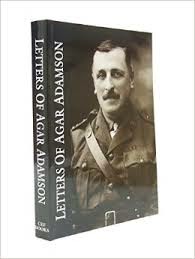
Agar Adamson
Thanks to the prolific letter writing of Agar Adamson, we know a lot about the day to day experiences of the officers and men of the PPCLI from the time of its formation to the end of the war. Agar Adamson was born to a well-connected Canadian family in Ottawa on Christmas Day 1865. Adamson was educated at Trinity College School in Port Hope and Corpus Christi College in Cambridge England. He was known as an excellent athlete, playing several sports, and as a prize winning horseman. He returned to Canada, without a degree, and became a junior clerk of the Senate in February of 1890. In 1893 he obtained a 2nd Lieutenant’s commission with the Governor General’s Foot Guards militia regiment and, by 1899, had risen to the rank of Captain. He married Ann Mabel Cawthra, a Toronto heiress and artist in November of 1899. Four months later, Adamson used his connections to obtain a Lieutenant’s commission in Lord Strathcona’s Horse, a Canadian cavalry regiment engaged in fighting in the Boer War in South Africa. After close to a year of active service, Agar fell in and was sent back to Canada as unfit for further duty. He spent several years at various business pursuits until war was declared in 1914. Despite being blind in one eye, he obtained a post as a Captain in the PPCLI, reached England in October of 1914 and, during his three years in the trenches wrote almost daily letters to his wife. Adamson eventually rose to the rank of Lieutenant Colonel and, on October 31st, 1916 was given command of the regiment. He would lead the PPCLI through the battles of Vimy Ridge and Passchendaele. 

In the book “Letters of Agar Adamson”, historian Norm Christie presents a collection of Agar’s letters to Mabel. These letters are frequently quoted in Christie’s documentary television series about Canada’s participation in the Great War entitled “For King and Empire”. Most of these letters ended with Agar’s personal  salutation to his wife, “Ever thine, Agar.” On May 7th the PPCLI’s sector was the focus of enemy shelling as a prelude to an attack. The following is Agar’s letter describing the situation in vivid detail:

Bellewaerde Ridge, 6 pm., 7th May, 1915

My dear Mabel,
We moved up last night from our support dugouts, having been fairly well shelled. Gow (Lieut.) shot badly, was alive when we left, 4 men killed, 9 wounded, 2 went mad, 6 in what is called “in a state of collapse”, having been shelled all day and having to remain underground all day.
Today in advanced trenches since last night under very heavy artillery fire, living in deep ditches, 5 killed, 11 wounded, 1 machine gun smashed to pieces and crews buried and wounded. Capt. Grey badly shot. Counter attack by British on Hill 60 failed to dislodge enemy. Enemy in front of us advancing their line of trenches and sniping force every direction, fire from Maxims and artillery come from 3 different directions. Our artillery almost silent and out-ranged in many places. Lieut. Bainsmith wounded.
We are relieved tomorrow night but return to dugouts, equally dangerous, though out of rifle fire. A man cannot show himself without artillery letting off at the position. I think a trapped rat would be a more accurate simile than the Knight in Alice in Wonderland.
Gault, Niven (now adjutant) and I sleep in one little dugout. You did not send me the photographs. I forgot if the baseball bats did arrive, back at the transport, they could very well be used here as a weapon of defense, when our ammunition runs out. Thank you for sending them. We now have 400 fighting men and 7 officers. Hance is up with us.
Two men have gone mad and have had to be disarmed.
It seems to be certain that this line cannot be held and we are only making a bluff at it.

On May 8th, 1915, the PPCLI’s defense at the Battle of Bellewaerde Ridge cemented the unit’s reputation as a fighting unit but at a steep cost. When they came out of the line after three days in combat they had lost 500 men. The remnants of the regiment were commanded by a lieutenant, all other officers having been killed or wounded. Agar Adamson was wounded slightly in the shoulder as Mabel would learn in a letter from the Militia Council on May 13th. Mabel’s next letter from Agar was as follows:

I arrived last night and am in Lady Ridley’s Hospital 10 Carleton House Terrace.
I am only slightly wounded in the shoulder. Please bring a toothbrush and tooth powder and a package of Auto Strap Razor blades.

We’ll see more of Agar Adamson’s correspondence in the weeks and months ahead as we share his experiences in the trenches of the western front. During the next three years, we will continue to mark notable anniversaries of Canada’s involvement in the Great War.


Coincidently, May 7, 1915 was also the day that the ocean liner RMS Lusitania was sunk by a German submarine off the south coast of Ireland. The sinking caused an international incident as a number of American citizens were killed in the attack. The result was an increase in anti-German sentiment in the U.S.A. but the Americans did not enter the war on the side of the allies until April 6th, 1917 (3 days before the successful Canadian assault on Vimy Ridge). 


Joe Corrigan has been Museum Manager at Lang Pioneer Village since February of 2003. He has been a lifelong student of history. His specific areas of interest are Canadian and world political, military and sports history with a particular focus on biographical works. Joe has been interpreting Sir John A. Macdonald at the Museum's Historic Dominion Day event since 2007. 


Tuesday, 5 May 2015

In Flanders Fields – Part 2

Centennial Anniversary Event – May 3, 1915 – In the immortal Words of …

By Joe Corrigan

The 2nd Battle of Ypres, the first time Canadian troops had been engaged in a major battle of the First World War, was in its twelfth day and the casualties had been very heavy. The field hospitals were all but overwhelmed with the flood of wounded and gassed soldiers they were faced with. In the midst of all this chaos, a senior medical officer took the time to preside over the funeral of his close friend, Lieutenant Alexis Helmer. The doctor had been treating casualties in an 8’ by 8’ bunker just behind the Yser canal about two miles north of Ypres. After the service, the physician, who was also a poet and author, wrote a 15 verse poem to express his feelings on the loss of his comrade and the need to carry on the fight so that his sacrifice and those of the fallen would not have been in vain.
Major John McCrae
It only took twenty minutes to complete and the poet was not pleased with his work and tossed it aside. Fortunately, someone was able to convince him of the worth of the piece. In December of 1915, the poem was published in the British magazine “Punch” and its verses have been a part of almost every Canadian commemoration of Remembrance Day ever since. The physician poet was Major John McCrae originally of Guelph, Ontario and his poem was “In Flanders Fields”.

I recently read an article that compared McCrae’s poem with Abraham Lincoln’s Gettysburg Address. Both pieces are brief and powerful, pay homage to the fallen and urge the audience to carry on the struggle. It is ironic that, given the continued popularity of both works, neither of these two men felt their words could adequately express the sentiments they wished to convey. As noted, McCrae discarded the poem at first and, in his own words, Lincoln concluded that “the world will little note, nor long remember what we say here.” Yet today, both these literary works live on and, in the commemoration of their subject events, bring generation after generation a newfound appreciation of the “brave men, living and dead, who struggled here.” As a Canadian and a hockey fan I should like to note that both the Montreal Canadiens and the Toronto Maple Leafs, teams that were founded in the early 20th century, take inspiration from the sacrifice of Canadians in the Great War. The Toronto Maple Leafs crest is based on the “CANADA” maple Leaf badge pictured with this article and worn by the vast majority of our soldiers in World War I. Les Canadiens make use of the torch as a symbol to urge their players to carry on the great tradition of the team; one that has 24 Stanley Cup Championships. Far and away the most of any team in the NHL.

John McCrae, by then a Lieutenant Colonel and Commanding Officer of No. 3 Canadian General Hospital at Boulogne, died on January 28, 1918 of pneumonia and meningitis. He was buried with full military honours in Wimereux Cemetery in a service that was attended by Sir Arthur Currie, Commanding General of the Canadian Expeditionary Force. A collection of his poetry entitled “In Flanders Fields and Other Poems” was published shortly after his death in 1918.   

In the immortal words of John McCrae:

 “In Flanders Fields”
In Flanders fields the poppies blow
Between the crosses, row on row.
That mark our place, and in the sky
The larks, still bravely singing, fly
Scarce heard amid the guns below.

We are the Dead. Short days ago
We lived, felt dawn, saw sunset glow.
Loved and were loved, and now we lie
in Flanders fields.

Take up our quarrel with the foe:
To you from failing hands we throw
The torch; be yours to hold it high.
If ye break faith with us who die
We shall not sleep, though poppies grow
In Flanders fields.  

John McCrae with his dog Bonneau

To learn more about the writing of the poem “In Flanders Fields” check out the April-May edition of Canada’s History magazine which has an article by J. Andrew Ross entitled “Born of Fire & Blood.” Ross contends that “When John McCrae wrote ‘In Flanders Fields’ a hundred years ago he unleashed a force more powerful than any weapon of war.” As mentioned in my previous blog; Steve Guthrie of CHEX Television News produced a two part segment on the 57th Regiment of Militia, Peterborough’s militia regiment prior to World War I, and the participation of local troops in the 2nd Battle of Ypres. The two YouTube videos are posted on Lang Pioneer Village Museum’s Facebook page. Other interesting documentaries on the First World War include historian Norm Christie’s series entitled “For King and Empire” and the BBC documentary entitled “The Great War’ which dates from the 1960’s and includes interviews with people who experienced the events first hand. Canada’s History magazine has published “Canada’s Great War Album” which includes historical perspectives from a number of noted authors along with a collection of personal stories passed down from descendants of the soldiers and others who lived in those times. During the next three years, we will continue to mark notable anniversaries of Canada’s involvement in the Great War.


Joe Corrigan has been Museum Manager at Lang Pioneer Village since February of 2003. He has been a lifelong student of history. His specific areas of interest are Canadian and world political, military and sports history with a particular focus on biographical works. Joe has been interpreting Sir John A. Macdonald at the Museum's Historic Dominion Day event since 2007. 

Tuesday, 28 April 2015

In Flanders Fields – Part 1

Centennial Anniversary Event - April 1915 - The 1st Canadian Division’s Baptism of Fire at the 2nd Battle of Ypres

By Joe Corrigan

As is the case with many Canadians who can trace their family history in this country back to the 19th century or before, I have an ancestor who fought in the Great War of 1914 to 1918. His name was Charles O’Connor and he is my maternal grandfather. Charles was born in Whitby, Ontario on May 9, 1894. He was a moulder by trade. On May 1st, 1918, at the age 23, Charles O’Connor, serial number 809277, joined the Canadian Army. After initial training at Camp Borden he was sent overseas and assigned to the 15th Battalion of the Canadian Expeditionary Force (CEF). He entered the line in October of 1918, about one month before the armistice.
When Minister of Militia Sir Sam Hughes championed the mobilization of the CEF in the late summer of 1914 he was determined to organize the force by creating new numbered battalions rather than sending existing militia regiments overseas. Despite this, regiments that were formed in the 19th and early 20th centuries have become inexorably linked with these numbered battalions. The 15th Battalion’s battle honours are maintained by the 48th Highlanders regiment of Toronto.

Pvt. Charles O'Connor, 15th Battalion CEF 1918
Despite only being in the line for a month before the end of hostilities, Charles O’Connor took part in fierce fighting during a period that came to be known as Canada’s “100 Days”. By this time in the war, Canadian troops had earned a hard won reputation as one of the allied armies’ finest fighting forces. Despised as “colonials” when they first came on the scene in the fall and winter of 1914 / 1915, the Canadian Corps was now revered as “shock troops”. Such was their reputation that, when the Germans learned that the Canadian Corps was moving into a sector, they knew an attack was imminent. During these last few weeks of the fighting, Canadian troops were at the forefront of the advance and the 100 Days produced some of the highest casualty rates of the entire war, a war in which an average of 6,000 people were killed every day! 

As with so many veterans of World War I, we know very little about the experiences of Private Charles O’Connor during the war. He earned the British War Medal and the Victory Medal for his service and received an honourable discharge on July 11, 1919. Apparently was exposed to poison gas, an encounter that would leave him with a cough for the rest of his life. He returned to civilian life, married Maude McCauley a teacher, and settled into life back in Whitby. The couple had three children, one son, Joseph and two daughters, Mary and Theresa.

Officially, Canadian casualties during the four years of the Great War are listed as 62,820 killed and 149,710 wounded for a total of 212,530 out of the 620,000 mobilized. That equates to a casualty rate of 34.3%. All this was endured by a population of just over 7 million. That doesn’t take into account those who died of the Spanish Flu which made its appearance towards the end of the war and took many millions of lives worldwide. These numbers become quite sobering when compared to the casualties experienced by our nation of 35 million during our 12 year mission in Afghanistan. During that campaign the Canadian Forces suffered 158 killed, 615 wounded and 1244 injured in non-combat related incidents. What our experience of Afghanistan has showed us is that the psychological impact of war is much greater than the physical casualty rates reveal. Many hundreds of the 40,000 Canadian veterans who served in Afghanistan face daily challenges struggling with Post Traumatic Stress Disorder or PTSD. Although the science of psychology existed around the time of World War I, an understanding of what was known as “Shell Shock” in the day was not extensive.

My grandfather lost his job during the depression that began in 1929. His wartime experiences came back to haunt him and he had to be hospitalized. Although he lived well into the 1970’s, and despite the fact that I was in my late teens at the time of his death, I never knew him. I saw him once before he died in his nursing home on a visit to western Ontario with my family. I remember he had a full head of white hair and that the nurses said he was a very patient man but he had long since lost the ability to communicate. What I later found out was that my mother, who was born in 1924, never really knew him either as he was hospitalized when she was just 5 or 6 years old. Though you won’t find the name of Charles Joseph O’Connor on the cenotaph in Whitby, the war cost him his life all the same.

The fact that April 22, 2015 was the 100th anniversary of the 2nd Battle of Ypres, the first time Canadian troops were engaged in a major battle of the war, served to bring my grandfather’s experiences to mind. 2nd Ypres was also the first use of poison gas in combat. Despite the lack of gas masks, Canada’s 1st Division fought heroically, improvised protection from the gas and blunted the German advance, preventing a possible war losing breakthrough. It was at a high cost however; our troops suffered over 6,000 casualties during the battle. Steve Guthrie of CHEX Television News produced a two part segment on the 57th Regiment of Militia, Peterborough’s militia regiment prior to World War I, and the participation of local troops in the 2nd Battle of Ypres. The two YouTube videos are posted on Lang Pioneer Village Museum’s Facebook page. Other interesting documentaries on the First World War include historian Norm Christie’s series entitled “For King and Empire” and the BBC documentary entitled “The Great War’ which dates from the 1960’s and includes interviews with people who experienced the events first hand. Canada’s History magazine has published “Canada’s Great War Album” which includes historical perspectives from a number of noted authors along with a collection of personal stories passed down from descendants of the soldiers and others who lived in those times. During the next three years, we will continue to mark notable anniversaries of Canada’s involvement in the Great War.

Painting entitled "Gassed" by Sargent John Singer RA (Royal Artillery) depicting allied troops having been gassed and on their way to the hospital for treatment

Joe Corrigan has been Museum Manager at Lang Pioneer Village since February of 2003. He has been a lifelong student of history. His specific areas of interest are Canadian and world political, military and sports history with a particular focus on biographical works. Joe has been interpreting Sir John A. Macdonald at the Museum's Historic Dominion Day event since 2007. 
  

Friday, 17 April 2015

Volunteer Superstar Series – The Sturgeon Family

By: Elizabeth King

National Volunteer Week 2015 is running from April 12th to April 18th. This is a time to recognize, celebrate and thank the thousands of Canadians who dedicate their time to volunteering. In honour of this celebration, Lang Pioneer Village Museum would like to recognize some of its Volunteer Superstars in a special daily blog post during this week, called the Volunteer Superstar Series. 

Friday’s Volunteer Superstar is: The Sturgeon Family.

Emily & Meg at the Milburn
 To celebrate the final day of our Volunteer Superstar Series, we have chosen the Sturgeon Family – Rob, Emily, James, Claire and Meg as our LPVM Volunteer Superstars!

Emily was the first member of the family to start volunteering at the Museum, back in the summer of 2012. By the Spring of 2013 – Rob was on board too. Now, the whole family volunteers – Emily, Rob and their three children: James, Claire and Meg. 

We love having whole families volunteer. Not only does it provide awesome opportunities for togetherness and mentoring for the family, but it also provides us with the occasion for an authentic interpretation of a REAL family working together in a historic building to demonstrate what life was like for the families of the early settlers of this County.

Emily can usually be found interpreting in either the Milburn or Fitzpatrick house, along with the girls to help her out. We know that when they’re here – there is always something yummy on the woodstove. Meg, the youngest, is a baker extraordinaire! Her ginger sparkles are lauded as the best in the Village!  J  The girls also help out behind the scenes a great deal, creating the beautiful samples that are given out at special events in the hundreds. Christmas cake and brandy sauce, are another of their specialties.

Emily is also a very skilled seamstress, and has created the period clothing worn by her family. She often comes to help out at Costume Department Bees – making dresses, bonnets, under garments and assisting with the tracing and sizing of patterns.

Rob in the Carpenter Shop
Rob has become one of our resident carpenters, and spends most of his time interpreting in the Carpenter Shop. However, he and his son James are always open to changing it up, and last year were in the Blacksmith shop telling the story of Stingy Jack – and the history of Jack-O-Lanterns. Rob has also acted in our Historic Walks of Lang – in the roles of drunken reveler, and Samuel W. Lowry working at the loom.

We are so lucky to have fabulous volunteers like the Sturgeon family. They are always willing to help out, and often have filled spots for us when we’ve been in a jam. Their generous and caring hearts, their passion for history and sharing their knowledge, make them  «  Genuine LPVM Volunteer Superstars!  «

Emily & Meg
Rob as Stingy Jack for Historic All Hallows' Eve

Emily tracing a costume pattern


Elizabeth King is currently filling the role of Interim Assistant Manager at Lang Pioneer Village Museum.  She has been working at the Village since May of 2009.  Elizabeth is passionate about history, costuming, reading, vegan culinary crusades and environmental pursuits. When she isn’t in the middle of a project at Lang, she is often found with her head in the clouds.


Thursday, 16 April 2015

Volunteer Superstar Series – Joyce


By: Elizabeth King

National Volunteer Week 2015 is running from April 12th to April 18th. This is a time to recognize, celebrate and thank the thousands of Canadians who dedicate their time to volunteering. In honour of this celebration, Lang Pioneer Village Museum would like to recognize some of its Volunteer Superstars in a special daily blog post during this week, called the Volunteer Superstar Series.

Thursday’s Volunteer Superstar is: Joyce. 

Joyce Williams has had a long involvement with Lang Pioneer Village Museum, as she is also a former staff member. Joyce returned to the Museum to volunteer her services, and give back to the Museum she loved working at. We like to think this is a good sign! Joyce has been donating her time to LPVM for over 13 years now.

Joyce cooks, bakes on the woodstove and interprets in the Milburn House. She can also be found filling out the group who interpret in the Keene Hotel at special events when things get quite hectic. Joyce regularly provides behind the scenes baking for samples which are used on these event days.

One of the most challenging roles Joyce fills is that of assisting and supervising youth volunteers in the BUSY children’s craft area at our Christmas by Candlelight event. This is a fast paced and demanding task- one that Joyce accomplishes with a twinkle in her eye, and not one bat of an eyelash. :)

Our visitors love Joyce – her patience, her knowledge, and her kindness make her a shining example of a superstar volunteer.

Joyce and her granddaughter Hayley
Joyce also knits items for us to sell in our Museum Shop, to help raise funds for the Museum. Her contributions are thoughtful and helpful. Joyce is always willing to lend a hand!

Joyce comes in weekly and on an as needed basis, and for many years brought along her lovely granddaughter Hayley to volunteer with her. In many cases, volunteering at Lang is a family affair. We are happy to continue to have Joyce as a regular fixture in the Village, and proud to say that her granddaughter, who for so many years was a dedicated volunteer, is also now part of the Lang staff team.

« « «  Thank you Joyce – you are definitely a Volunteer Superstar!  « « « 


A few photos of Joyce over the years


Elizabeth King is currently filling the role of Interim Assistant Manager at Lang Pioneer Village Museum.  She has been working at the Village since May of 2009.  Elizabeth is passionate about history, costuming, reading, vegan culinary crusades and environmental pursuits. When she isn’t in the middle of a project at Lang, she is often found with her head in the clouds.