Tuesday, 17 January 2017

Medical Tools in the 1800s

By Laetitia

Seemingly nightmarish, medical tools from the 1800s are something that you’d think would only come from the wildest imaginations. However, many of them, when you learn what they are used for, lose their nightmarish qualities, and you can actually see similarities between modern tools and their ancestors.

Given the opportunity to return to Lang Pioneer Village, I was excited to say the least. One of my most vivid childhood memories involves wandering the streets of the village, awestruck at the history surrounding me. It was like Disneyland, but even better, because it was real.

Poking through the archives, I stumbled upon a pair of forceps, and due to their strange shape and similarity to modern tools, was fascinated. After taking a couple of pictures and spending time researching, I discovered that they are the bullet removing forceps. A subcategory of hemostats, they were used to control bleeding and remove bullets. They became popular particularly in North America during the American civil war.

The 'toothed' edge of the clamp allowed a firm grasp on tissue, however, the cupped end allowed grasping of the bullet for removal

Scissor-like operation made them easy to manipulate in surgery

The second tool I found was odd, to say the least. Its purpose unknown to the staff at Lang, it was surrounded by speculated uses. Due to its odd shape, it took much research to discover what it could possibly be. It was discovered to be a bullet probe, used by doctors to locate and manipulate the position of a bullet in surgery to allow removal.

Bullet probe

The tool had interchangeable heads, allowing the doctor to determine the best possible size and shape for the situation and bullet in question.

Interchangeable 'heads' of the probe, which could be stored in the handle

The use of the bullet probes first really became popular during the American civil war, and the tool likely migrated north. Some were designed particularly for use with lead bullets, as the heads were made of porcelain, which would be left marked by the lead for more precise understanding of the location of the bullet.

Porcelain-tipped bullet probe

The final tool I discovered was the one that seemed the most innocuous, but upon research was revealed to be possibly the scariest instrument; the “tonsil guillotine”. Used to complete tonsillectomies, these had a sharp, changeable end that could be used to sever the infected tonsils. This appears to be the reusable part of a push blade tonsil guillotine, which was first invented in 1827 by doctor Philip Syng Physick.

Partial tonsil guillotine

Tonsillectomies can be traced all the way back to 1000 BC, however became much more popular in the 1800s. Unlike today, only part of the tonsil were removed. This frequently led to further obstructions and problems. However, towards the close of the 1800s, doctors discovered ways to handle post-operative bleeding and the complete removal of the tonsil became much more popular. Today, some of the tools used during tonsillectomies are believed to be modeled after the tonsil guillotine.


A complete tonsil guillotine
Source: http://object-ivity.com/collection/function/cutting/tonsil-guillotine-2/


Medicine in the 1800s certainly wasn’t what it is today, however it was revolutionary for its time. A shift into modern ideals and scientific reasoning, it, being the procedures, tools and doctors medicine was comprised of, is the reason that medicine is what we know today. Without the discoveries and inventions of the medical field in the 1800s, we would not be as cutting edge as we are today. 


Laetitia is a grade 11 student at Trinity College School and guest writer for the Museum.

Tuesday, 13 December 2016

Christmas

By Danielle

The wind is cold but the time is right,
Christmas is here; it’s a marvelous sight
Snow up to my ankles, flakes falling on my cheeks
Ready to skate somewhere near the creek
After a day of fun and games, the night comes
Family and friends gathered inside their homes
A feast is served where everyone enjoys
Laughter, music, chats and toys
All around a Christmas tree
People stare at the ornaments and see
Hanging metal birds, golden pinecones too
The night is almost over there’s only one more thing to do
To 19th Century Canada I say adieu 

The Miller's Cabin at Lang Pioneer Village- Photo by Hans Fischer


Danielle is a grade 11 student at Trinity College School and guest writer for the Museum.

Tuesday, 6 December 2016

In Flanders Fields Part 11 - "A Corner of A Foreign Field" Great War Poetry

By Joe Corrigan

I would hazard a guess that most Canadians are familiar with Lt. Colonel John McCrae's immortal poem "In Flanders Fields". That's the reason I chose it as the main title for this series of blogs on the history of the First World War. As noted in a previous segment, McCrae was inspired to write his poem during the aftermath of the 2nd Battle of Ypres in April 1915 following the death of a fellow officer and friend. It became famous following its publication by the British press shortly thereafter and is quoted to this day at Remembrance Day ceremonies across Canada and around the world.

John McCrae
In November I was in Toronto on my way to an Ontario Museums Association conference in Mississauga when I stopped to have dinner with my son. After dinner we dropped in at the Book City store on the Danforth, a favourite spot of both my son and I. On the shelves I came across a Daily Mail commemorative publication entitled "A Corner of a Foreign Field - The Illustrated Poetry of the First World War". The book contains close to 200 Great War era poems from professional and amateur poets alike. It represents a view from the trenches as well as from loved ones on the home front. In addition to McCrae's "in Flanders Fields" which is the first poem listed, the book includes works by  W.B. Yeats, Siegfied Sassoon, Wilfred Owen, Robert Frost, Laurence Binyon and a host of others.

Although these works are not generally as well known as "In Flanders Fields", I am familiar with some of these other works, in part due to their mention at remembrance ceremonies or in cinema. Here are just a couple of examples.

Portrait of  W. B. Yeats
An Irish Airman Foresees His Death by W.B. Yeats

I know that I shall meet my fate
Somewhere among the clouds above;
Those that I fight I do not hate,
Those that I guard I do not love;
My country is Kiltartan Cross,
My countrymen Kiltartan's poor.
No likely end could bring them loss
Or leave them happier than before.
Nor law, nor duty bade me fight,
Nor public men, nor cheering crowds,
A lonely impulse of delight
Drove to this tumult in the clouds;
I balanced all, brought all to mind,
The years to come seemed waste of breath,
A waste of breath the years behind
In balance with this life, this death.

I first encounter a reference to this poem when watching the movie "Memphis Bell" back in the early 1990's. It is the story of a World War II US Army Air Force B17 bomber crew embarking on the final mission in their tour of duty. While waiting for the mission to begin, one of the airmen recalls the poem in contemplation of whether or not he will survive the upcoming air battle.

Sopwith Triplane

This next poem is a reflection of the sudden terror troops in the trenches were often faced with. My grandfather was gassed during the later stages of the Great War and the experience impacted his physical and mental health for the rest of his life. The following poem brings graphically to life the horrors of chemical warfare that my grandfather and countless others on both sides endured on the Western Front.

Portrait of Wilfred Owen
Dulce et Decorum Est by Wilfred Owen

Bent double, like old beggars under sacks,
Knock-kneed, coughing like hags, we cursed through sludge,
Till on the haunting flares we turned our backs,
And towards distant rest began to trudge.
Men marched asleep. Many had lost their boots,
But limped on, blood shod. All went lame; all blind;
Drunk with fatigue; deaf even to the hoots
Of gas-shells dropping softly behind.

Gas! Gas! Quick boys! - An ecstasy of fumbling,
Fitting the clumsy helmets just in time,
But someone still was yelling out and stumbling
And floundering like a man in fire or lime...
Dim, through the misty panes and thick green light,
As under a green sea, I saw him drowning.
In all my dreams, before my helpless sight,
He plunges at me, guttering, choking, drowning. 

Ors Communal Cemetery- Wilfred Owen
If in some smothering dreams you too could pace
Behind the wagon that we flung him in,
And watch his white eyes writhing in his face,
His hanging face, like a devil's sick of sin;
If you could hear at every jolt, the blood
Come gargling from the froth-corrupted lungs,
Obscene as cancer, bitter as the cud
Of vile, incurable sores on innocent tongues, -
My friend, you would not tell with such high zest
To children ardent for some desperate glory,
The old Lie: Dulce et decorum est
Pro patria mori.

The final line of the poem is taken from the Roman poet Homer and translates as "It is sweet and honourable to die for one's country". Owen's mother had the poem published posthumously as her son did not survive the war. Tragically, Lieutenant Wilfred Owen was killed in action on November 4th, 1918, almost exactly one week before the end of the war. He was leading his troops in an attack on the Sambre-Oise Canal when he fell, an action for which he received the Military Cross. His mother learned of his death on the 11th of November, the day the guns fell silent across Europe.   

Gassed British 55th Division Troops

One stanza that is always quoted on November 11th (below in italics) comes from the poem "For The Fallen" although I never knew the poem's name until I read this book. One of the things that surprised me about this poem was the fact that it wasn't written after years on the front line. It was published in September of 1914 following the "Old Contempables" fighting retreat from the Belgian city of Mons. The "Old Contempables" was the name the British Expeditionary Force took for itself following the Kaiser's comment upon Britain's entry into the war in August 1914 that the professional British Army was a "contempable little army". 

Portrait of Laurence Binyon
For the Fallen by Laurence Binyon

With proud thanksgiving, a mother for her children,
England mourns for her dead across the sea.
Flesh of her flesh they were, spirit of her spirit,
Fallen in the cause of the free.

Solemn the drums thrill: Death august and royal
Sings sorrow up into immortal spheres.
There is music in the midst of desolation
And a glory that shines upon our tears.

They went with songs to the battle, they were young,
Straight of limb, true of eye, steady and aglow.
They were staunch to the end against odds uncounted,
They fell with their faces to the foe.

Laurence Binyon by William Strang
They shall grow not old, as we that are left grow old:
Age shall not weary them, nor the years condemn,
At the going down of the sun and in the morning
We will remember them.

They mingle not with their laughing comrades again;
They sit no more at familiar tables of home;
They have no lot in our labour of the day-time;
They sleep beyond England's foam.

But where our desires are and our hopes profound,
Felt as a well-spring that is hidden from sight,
To the innermost heart of their own land they are known
As the stars are known to the Night;

As the stars that shall be bright when we are dust,
Moving in marches upon the heavenly plain,
As the stars that are starry in the time of our darkness,
To the end, to the end, they remain.

Coming up in the series:

One hundred years ago, in November 1916, the Canadian Expeditionary Force disengaged from the fighting at the Somme after sustaining 24,000 casualties in just over two months of combat. They moved north to occupy a 6 kilometre long section of the line facing a German stronghold known as Vimy Ridge! In the months to come, we will examine the logistics, tactics and the events of the battle that marked Canada's coming of age on the world scene.
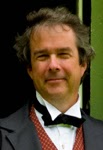

Joe Corrigan has been Museum Manager at Lang Pioneer Village since February of 2003. He has been a lifelong student of history. His specific areas of interest are Canadian and world political, military and sports history with a particular focus on biographical works. Joe has been interpreting Sir John A. Macdonald at the Museum's Historic Dominion Day event since 2007.    

Tuesday, 8 November 2016

In Flanders Fields – Part 10: “Hello Canada and hockey fans in the United States and Newfoundland!”

By Joe Corrigan

Those of us of a certain age can remember that signature sign on from legendary hockey play-by-play announcer Foster Hewitt at the start of his Saturday night hockey broadcasts from the gondola high up in Maple Leaf Gardens. Growing up in the 1960s we used to look forward with anticipation for 8:00 pm when the Leafs game would come on the air. Toronto Maple Leaf owner Conn Smythe insisted that the game not be broadcast until near the end of the first period to ensure that ticket sales were not impacted by the new medium of Television.

   Foster Hewitt
Conn Smyth


The National Hockey League is celebrating the 100th anniversary of its founding this season. It’s odd to think that the league would come into being at a time when the nation was fully engaged in the Great War but play began in 1917. The league was founded with four teams that emerged after disputes could not be resolved among the owners of the National Hockey Association (NHA). The founding teams were the Montreal Canadiens, Montreal Wanderers, Ottawa Senators and Toronto Arenas. Over the years there have been many franchise changes as the league evolved from four to six to twelve and then to thirty teams. Although the Ottawa Senators re-emerged in the 1990s after their initial demise in the depression era, the only two continuously operating franchises have been the Montreal Canadians and the Toronto franchise. I say the “Toronto franchise” because the team was initially known as the Arenas before being renamed the St. Pats in the 1920s to cater to the Toronto Irish population. It wasn’t until February of 1927 that they became the Toronto Maple Leafs. The legend and lore of both the Montreal Canadiens and the Toronto Maple Leafs are firmly rooted in the experience of Canadian troops in WWI.

The renaming of the St. Pats to the Toronto Maple Leafs was founder Conn Smythe’s idea. Smythe had been an observer in the Royal Flying Corps and had been shot down and taken prisoner in October of 1917 around the time of the Battle of Passchendaele. Despite a couple of escape attempts, Smythe remained a prisoner for the duration of the war. After the war, his prowess as an entrepreneur placed him in a position to buy the St. Pats. When recounting his reasons for the choice of the nickname “Maple Leafs”, a grammatical error by the way, Smythe said: “The Maple Leaf to us, was the badge of courage, the badge that meant home. It was the badge that reminded us all of our exploits and the different difficulties we got into and the different accomplishments we made. It was a badge that meant more to us than any other badge that we could think of... so we chose it... hoping that the possession of this badge would mean something to the team that wore it and when they skated out on the ice with this badge on their chest... they would wear it with honour and pride and courage, the way it had been worn by the soldiers of the first Great War in the Canadian Army."  
Canadian Troops WWI

Similarly, les Canadiens evoked the memory of the Great War to build a proud tradition of winning over their long and distinguished history. The “Habs” as they are commonly known, have won 24 Stanley Cups, almost twice as many as their nearest competitor. This tradition of winning has been passed down from one generation of players to the next thanks, in part, to a slogan that has appeared on their dressing room wall for decades. It is a quote from John McCrae’s immortal poem “In Flanders Fields” which goes “To you from failing hands we throw the torch be yours to hold it high”. Talk about motivation.

Believeau

Red Kelly

So next time you see a game between these two old rivals remember their team identities stem from a respect for the sacrifice of the Canadian Expeditionary Force in their struggles on the battlefields of France and Belgium.        


Joe Corrigan has been Museum Manager at Lang Pioneer Village since February of 2003. He has been a lifelong student of history. His specific areas of interest are Canadian and world political, military and sports history with a particular focus on biographical works. Joe has been interpreting Sir John A. Macdonald at the Museum's Historic Dominion Day event since 2007. Joe has been a life-long Toronto Maple Leafs fan and wears number 4 in honour of his hockey hero, Red Kelly. 

Wednesday, 26 October 2016

Halloween Origins: Why Is All Hallows’ Eve believed to be a good time to divine your future?

By Laurie Siblock

Divination is the forecasting of the future using supernatural means. Samhain (pronounced SOW-in) is the Celtic harvest festival that later became Christianized as All Hallows’ Eve or Hallowmas. It was around Samhain, according to the ancient Celts, people who lived 2000 years ago in the area that is now Ireland, the United Kingdom and northern France, that the god of summer is defeated the god of winter and death now presided over Mother Earth.

It’s a special day when the veil between the living and the dead thins. This creates an opportunity for communication between these worlds. During this transformational period between light and dark, and life and death, it was believed that there is an opening—a pause in time when magic is believed to be at its strongest, making it a perfect time for divination, palm reading, tarot and other methods of foretelling the future. It was even a time when fairies were thought to be out in their strongest numbers and thus, they could more easily be seen.

In Victorian times in North America, divination games became popular at Halloween parties, as upper society English attempted to discourage the more destructive shenanigans of Halloween – the unhinging of gates, pulling up of cabbage patches, tipping of outhouses – by moving parties indoors. These parties, intended for young people, like any young person’s party in the Victorian period, became an opportunity for matchmaking. Divinations that aided in determining the name of your intended were very popular at Halloween parties. In one such game, a ring was suspended by a hair over a cup. The number of times it hit the side before it became still coincided with the letter of the alphabet of the future husband or wife’s name.

At All Hallows’ Eve on October 28th and 29th from 6 – 9 pm, while the veil between this world and the next is thinnest, we’re anticipating the fairies might be flitting about at the Magical Milburn House. If they are, and if you see them, they just might bless you with a personal strength to carry with you the rest of your life. You may also stop at the Clairvoyant Carpenter Shop to have your future told by a palm reader or tarot card reader. It’s not for everyone. Some would rather keep the future a mystery and that’s okay too. You can always jump ahead and go “soul-caking” at the Feasting Fitzpatrick House.


Laurie Siblock is the Assistant Manager at Lang Pioneer Village Museum. Her role in the Village, beginning in 2006, involves crafting special events and working with special projects like the Jacquard Loom Project and Aabnaabin Camp, a First Nations encampment circa 1825 developed in partnership with Curve Lake and Hiawatha First Nations.  She is also a member of the Kawartha Truth and Reconciliation Support Group. When not at Lang Pioneer Village, she can be found with her nose in a book, often related to First Nation history and social justice, or working away in her fibre art studio.

Tuesday, 25 October 2016

Origins of Halloween: Why do we carve faces into pumpkins for our windows and porches?

By Laurie Siblock

Stingy Jack at Lang Pioneer Village Museum's Historic
All Hallows' Eve. Photo by Dawn Knudsen
The carved pumpkin has come to symbolize All Hallows’ Eve as much as ghouls, goblins, ghosts, and witches. But do you know how the Jack O' Lantern has come to be associated with All Hallows’ Eve?

The answer seems to lie in an Irish folktale about a stingy blacksmith named Jack, who was known far and wide as a quick-tempered, unrepentant, too-clever reveler who was fond of the drink. Twice, as the story goes, he made a soul-surrendering pact with the devil and twice managed to trick him into releasing his claim on him, but it all came back on him when he died. 

According to legend, as a sinner who’d had dealings with the devil, Jack could not be admitted to heaven, and he’d unwittingly surrendered his passport to Hades as well through his trickery with the devil. He was thus doomed to forever wander in limbo, a dark and dreary place you’d not wish on anyone. However, the devil, feeling an uncharacteristic moment of pity for poor Jack, tossed him a lump of burning coal from the inferno. This Jack placed in a hollowed out turnip so that at least he had a bit of light to guide his eternal wanderings. 

As this legend grew in popularity, on All Hallows’ Eve, the Irish hollowed out turnips, rutabagas, gourds, potatoes and beets. They placed a light in them to ward off mischievous spirits and to keep “Stingy Jack” away. These were the original Jack-O-Lanterns. 
In the 1800’s, a large number of Irish immigrants came to North America and were introduced to the pumpkins that had been cultivated here by the First Nations. The Irish quickly discovered how much bigger the pumpkins were and how much easier they were to carve out!  Have you ever tried to carve a turnip? It’s not an easy task, so very quickly pumpkins became favoured for carving, lighting and placing on our porches. 
Keep your eyes open on All Hallows’ Eve at Lang Pioneer Village Museum on Friday, October 28 & Saturday, October 29th, for the veil between the living and those that are, well… not living, is thinnest on these nights. You just might catch a glimpse of Stingy Jack wandering like a lost soul. You’ll recognize him. He’ll be the one clutching a turnip with a fiery lump of coal in it.


Laurie Siblock is the Assistant Manager at Lang Pioneer Village Museum. Her role in the Village, beginning in 2006, involves crafting special events and working with special projects like the Jacquard Loom Project and Aabnaabin Camp, a First Nations encampment circa 1825 developed in partnership with Curve Lake and Hiawatha First Nations.  She is also a member of the Kawartha Truth and Reconciliation Support Group. When not at Lang Pioneer Village, she can be found with her nose in a book, often related to First Nation history and social justice, or working away in her fibre art studio.

Friday, 21 October 2016

Origins of Halloween: Why do we go from house to house trick-or-treating?

By Laurie Siblock


During the Middle Ages, the Catholic Church competed with Samhain by launching a trio of Christian holidays known as Hollowmas. October 31 became All Hallows’ Eve, then later Halloween, November 1 became All Saint’s Day, and November 2, All Souls’ Day, was named to honour the dead who were non-saints. Rather than offering sacrifices for the dead as the Celts had done, the faithful were encouraged to offer “soul cakes”. A soul cake is a small round cake which was made for All Souls’ Day to celebrate the dead. The cakes, referred to as “souls”, were given out to “soulers” (mostly children and the poor) who went from door to door on All Hallows’ Eve singing and saying prayers for the dead. Each cake eaten represents a soul being freed from Purgatory. The practice of giving and eating soul cakes is often seen as the origin of modern trick-or-treating.

To go “A-Souling”, this All Hallows’ Eve, when you go door to door, instead of “Trick or Treat” say this excerpt of a rhyme from a traditional soul cake song:


A soul! a soul! a soul-cake!
Please good Missis, a soul-cake!
An apple, a pear, a plum, or a cherry,
Any good thing to make us all merry.


Laurie Siblock is the Assistant Manager at Lang Pioneer Village Museum. Her role in the Village, beginning in 2006, involves crafting special events and working with special projects like the Jacquard Loom Project and Aabnaabin Camp, a First Nations encampment circa 1825 developed in partnership with Curve Lake and Hiawatha First Nations.  She is also a member of the Kawartha Truth and Reconciliation Support Group. When not at Lang Pioneer Village, she can be found with her nose in a book, often related to First Nation history and social justice, or working away in her fibre art studio.